
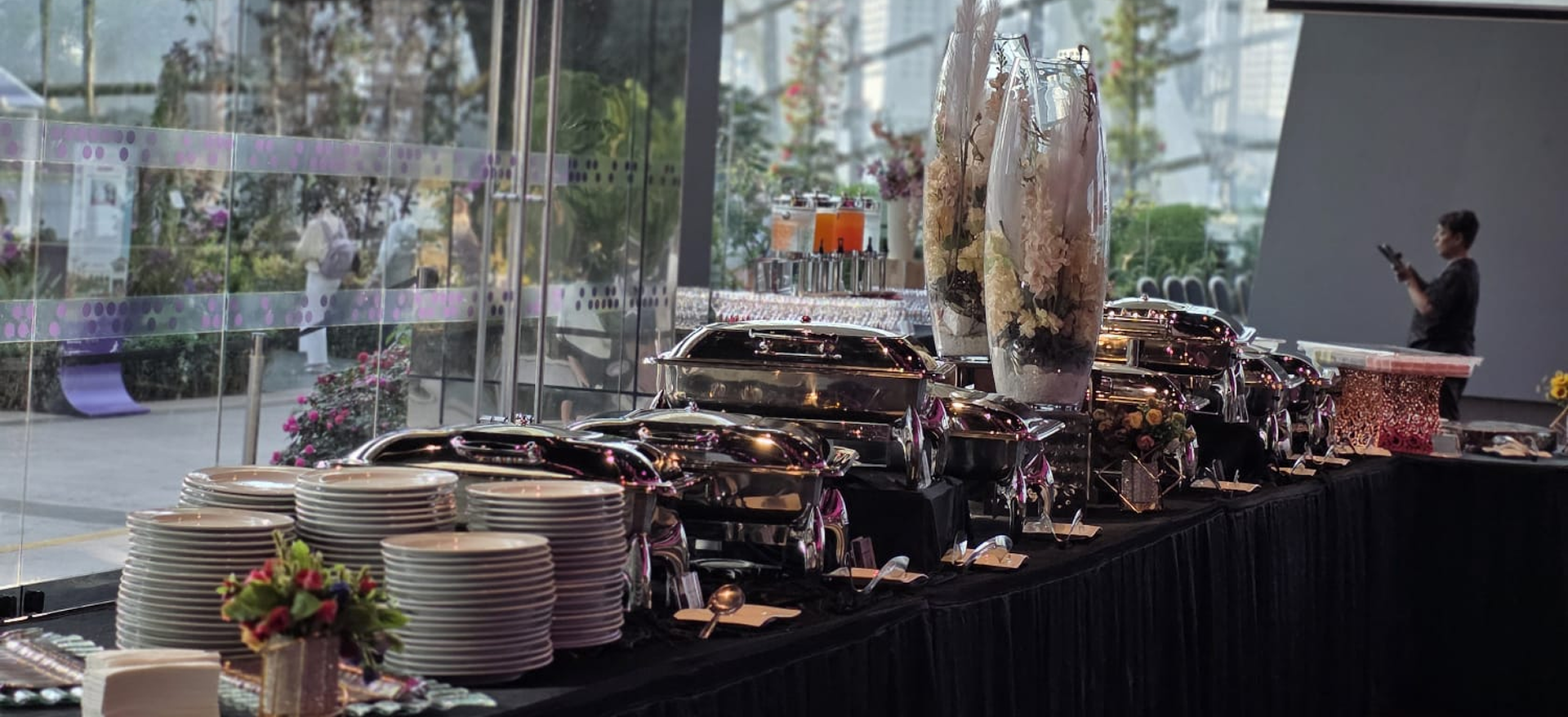
A caterer displays an ISO 22000 certificate on their website. Before contracting, you verify the certificate via IAF CertSearch and discover it expired six months ago. ISO 22000 certification is not legally mandatory in Singapore, but SFA recognizes it under the Safety Assurance for Food Establishments (SAFE) framework, and many government and corporate tenders now require or prefer it — making verification a non-negotiable step in procurement due diligence.
Standard at a Glance
|
Field |
Detail
|
|---|---|
|
Issuing Body |
International Organization for Standardization (ISO); adopted in Singapore as SS ISO 22000 |
|
Legal Basis |
International voluntary standard; SFA recognizes ISO 22000 under SAFE, accepting SAC-accredited or IAF MLA signatory certification bodies; not legally mandatory but aligns with Sale of Food Act requirements |
|
Jurisdiction |
International (applicable globally); SS ISO 22000 in Singapore |
|
Scheme/Framework |
ISO 22000:2018 Food Safety Management Systems (current edition; replaced ISO 22000:2005 in June 2018; amendment ISO 22000:2018/Amd 1:2024 published February 2024 for climate action) |
|
Validity & Renewal |
3-year certificate with annual surveillance audits in Years 1 and 2; recertification audit in Year 3; failure to complete surveillance triggers suspension |
|
How to Verify |
Check IAF CertSearch for current status; confirm certification body is SAC-accredited or IAF MLA signatory; verify certificate scope covers catering/food preparation |
|
Official Sources |
ISO, SAC, SFA SAFE framework |
|
Common Failures |
Management review missing required inputs, internal audits not followed by effectiveness verification, inadequate temperature monitoring during transport/buffet holding, allergen cross-contamination, traceability gaps |
What ISO 22000 Is
ISO 22000:2018 Food Safety Management Systems is an international standard published by ISO specifying requirements for a food safety management system (FSMS). The current version (ISO 22000:2018) replaced the 2005 edition in June 2018 through a technically revised clause sequence; a minor amendment (ISO 22000:2018/Amd 1:2024) covering climate action changes was published in February 2024. Singapore adopted the standard as SS ISO 22000, with the Singapore Accreditation Council (SAC) — the national accreditation body under Enterprise Singapore — offering ISO 22000 certification since October 2006.
Legal basis: ISO 22000 is a voluntary standard, not a legal requirement for food businesses in Singapore. However, SFA requires all food businesses to implement food safety management systems, and ISO 22000 is one of the most widely accepted frameworks for meeting this requirement. SFA recognizes ISO 22000 under the SAFE framework, accepting certification from bodies accredited by SAC, signatories of the International Accreditation Forum (IAF) multilateral recognition arrangement (MLA) for ISO 22000 and FSSC 22000, or BRCGS-recognized accreditation bodies that are signatories of the IAF MLA.
Distinguishing sibling schemes buyers confuse:
- HACCP (Codex Alimentarius CXC 1-1969): A methodology for hazard analysis and critical control points. ISO 22000 wraps HACCP inside a full management system — HACCP is the hazard-analysis tool; ISO 22000 is the comprehensive FSMS that incorporates it within Clause 8 (Operation) plus Annex SL management-system requirements.
- FSSC 22000: ISO 22000 PLUS sector-specific prerequisite programmes (ISO/TS 22002-x) PLUS FSSC 22000 additional requirements. FSSC 22000 is GFSI-benchmarked; ISO 22000 alone is NOT GFSI-recognized. Many multinational retailers and food manufacturers require GFSI-benchmarked certification as a supply-chain condition — ISO 22000 will not satisfy a GFSI requirement.
- Singapore schemes (SS 444, SS 590, SS 583): SS 444 is HACCP for food industry; SS 590 is HACCP-based FSMS aligned with ISO 22000 as a stepping stone; SS 583 is a code of practice for food service establishments (a pre-licensing requirement for SFA’s food caterer licence). ISO 22000 is internationally recognized and most comprehensive, recommended by Enterprise Singapore for organizations in the food chain including catering.
What ISO 22000 Requires
ISO 22000:2018 follows the Annex SL high-level structure, consisting of 10 clauses. The audited criteria span management-system foundation (Clauses 4-7) and HACCP-integrated operation and improvement (Clauses 8-10):
- Clause 4 — Context of the Organization: Understand external/internal issues (regulatory changes, supply-chain dependencies, economic conditions affecting sourcing); identify interested parties (customers, SFA, employees, suppliers, consumers) and their food-safety requirements; determine FSMS scope (which products, processes, sites are covered).
- Clause 5 — Leadership: Top management demonstrates commitment (allocate resources, ensure FSMS integration into business processes, promote food-safety culture); establish a documented food safety policy committed to continual improvement and compliance; assign food-safety roles and responsibilities including a food-safety team leader.
- Clause 6 — Planning: Address organizational risks and opportunities (distinct from operational food-safety hazards — business continuity, supply-chain disruption, regulatory change, reputational risk); set measurable FSMS objectives aligned with the food-safety policy; plan changes to the FSMS (new products, processes, regulations).
- Clause 7 — Support: Provide competent personnel, suitable infrastructure (production facilities, equipment, utilities), controlled work environment (hygiene, temperature control, segregation); maintain documented information (FSMS documents and records — food-safety policy, HACCP plan, procedures, PRPs, monitoring data, corrective actions, internal audits, management reviews); conduct training and awareness programmes; establish internal and external communication channels (with suppliers, customers, regulators, consumers).
- Clause 8 — Operation (HACCP integration): Establish prerequisite programmes (PRPs — facility design, utilities, cleaning/sanitation, waste management, pest control, personal hygiene, raw material receiving/storage, equipment maintenance, per ISO/TS 22002-2 for catering); maintain traceability system (trace products and ingredients one step forward to customers, one step backward to suppliers); plan emergency preparedness and response (power failure affecting refrigeration, fire, flood, contamination alert); conduct hazard analysis (identify biological, chemical, physical hazards at each process step; assess severity and likelihood; determine acceptable levels); validate control measures (confirm time/temperature combinations for cooking, pH control, metal detection thresholds achieve intended food-safety outcome); establish hazard control plan with Critical Control Points (CCPs — where control is essential, e.g., cooking temperature ≥75°C for 15 seconds) and Operational Prerequisite Programmes (OPRPs — control measures for significant but not critical hazards, e.g., refrigerated storage ≤4°C, allergen segregation); control monitoring and measurement (calibrate and maintain thermometers, pH meters, metal detectors); verify PRPs and hazard control plan (calibration checks, environmental testing, finished-product sampling, review of monitoring records); control nonconformities (quarantine suspect product, implement corrections, take corrective action identifying root cause and preventing recurrence).
- Clause 9 — Performance Evaluation: Monitor, measure, analyze, and evaluate FSMS performance (CCP limits, OPRP action criteria, customer complaints, internal audit findings, supplier performance); conduct internal audits at planned intervals (typically annually) to verify FSMS conforms to ISO 22000 requirements and is effectively implemented; hold management review at planned intervals (at least annually) covering changes in external/internal issues, FSMS performance trends, verification results, continual improvement opportunities, resource needs.
- Clause 10 — Improvement: Implement corrective action when nonconformities occur (react to control and correct, evaluate root cause with 5-Whys/fishbone/failure-mode analysis, implement corrective action, review effectiveness, update FSMS if necessary); continually improve FSMS suitability, adequacy, and effectiveness (updated HACCP plans, reduced customer complaints/nonconformities year-over-year, improved internal audit findings, adoption of new technologies like automated temperature monitoring); update FSMS at planned intervals and whenever changes occur (new products, regulations, suppliers, food-safety incidents).
ISO/TS 22002-2:2013 (Prerequisite programmes on food safety — Part 2: Catering) details catering-specific PRPs covering facility construction and layout (separation of clean/dirty zones, raw/cooked flow), utilities (potable water, ventilation, lighting), waste disposal (closed containers, daily removal), equipment suitability/cleaning/maintenance (food-contact surfaces non-toxic/non-absorbent, preventive maintenance for monitoring devices), supplier approval and incoming inspection (temperature checks for chilled/frozen goods, allergen verification), cross-contamination prevention (physical separation of raw and ready-to-eat foods, dedicated utensils, colour-coded equipment, handwashing between tasks), cleaning and sanitizing (documented schedules, food-safe detergents/sanitizers, verification via visual inspection/ATP swabs/allergen swabs), pest control (site plan with bait stations, monitoring traps, corrective actions if pests detected), personnel hygiene (handwashing, glove use, no jewellery, hair restraints, health declarations, clean uniforms), product recall procedures (documented plan, contact lists, mock recall test annually, traceability system), warehousing (temperature-controlled storage refrigerators ≤4°C freezers ≤-18°C, FIFO, allergen segregation, raw/cooked separation), product information (allergen labelling, buffet signage, use-by dates), and food defence (access control, visitor logs, security of ingredients/packaging).
Who ISO 22000 Applies To
ISO 22000 is applicable to all organizations in the food chain regardless of size or complexity, including primary producers, food manufacturers, transport and storage operators, caterers, retailers, and subcontractors. In Singapore catering and food-service procurement context, typical applicants are buffet caterers, large-format event caterers, on-site dining contractors, central-kitchen operations, hotels and F&B operations, food distributors and cold-chain logistics providers, and ingredient/additive suppliers.
ISO 22000 is not legally mandatory in Singapore. However, SFA requires all food businesses to implement food safety management systems, and ISO 22000 is one of the most widely accepted frameworks for meeting this requirement. Many government and corporate procurement contracts now require or prefer suppliers with ISO 22000 certification. Category 1 food establishments can fast-track to grade ‘A’ under the SAFE framework with a certified FSMS (ISO 22000, FSSC 22000, or equivalent) PLUS appointment of an Advanced Food Hygiene Officer PLUS a one-year good food safety track record.
For buyers: If your tender specifies ISO 22000, verify the caterer’s certificate scope explicitly covers catering/food preparation/the meal type you are procuring. A certificate covering only manufacturing or central-kitchen operations does not automatically extend to off-site buffet service or satellite catering unless the scope explicitly states it.
How to Verify ISO 22000 Certification and Audit Failures to Watch
Verification checklist (four steps before contracting):
- Check certificate validity: Confirm issue date and expiry date (3 years from issue). If the certificate is within 30 days of expiry and no recertification audit is documented, query the caterer for updated certificate.
- Confirm certification body accreditation: The certification body must be SAC-accredited or an IAF MLA signatory. Check the SAC directory or IAF CertSearch. SFA recognizes certification from these bodies; certificates from unaccredited bodies have no regulatory standing.
- Verify scope covers the intended activity: The certificate scope should explicitly state catering, food preparation, or the specific product category (buffet service, bento boxes, off-site events). A scope limited to central-kitchen operations does not cover on-site buffet setup or satellite catering unless explicitly included.
- Cross-check current status via IAF CertSearch: The stale-certificate trap — a displayed certificate may be expired or suspended. IAF CertSearch is the real-time database of accredited certificates globally. Search by organization name or certificate number; status shows as valid, suspended, or withdrawn. If suspended or expired, the caterer is not currently certified regardless of the displayed certificate.
Common audit failures that cost caterers their certification or trigger surveillance-audit findings:
- Management review gaps: Management review not covering all required inputs (external/internal issues, FSMS performance trends, verification results, corrective-action effectiveness). Organizations that treat ISO 22000 as a static document rather than a living system consistently fail surveillance audits.
- Internal audit discipline: Internal audits conducted but corrective actions not verified for effectiveness. A closed finding without verification that the problem has not recurred is a nonconformity.
- HACCP hazard analysis incomplete: Hazards identified but severity/likelihood assessment missing or critical limits not validated. A HACCP plan without evidence that the control measures (e.g., cooking time/temperature) achieve the intended pathogen reduction is invalid.
- Monitoring and verification records weak: CCP monitoring logs incomplete or corrective actions taken when limits breached but no record of effectiveness review. Equipment calibration records missing or overdue.
- Food safety team not competent: Personnel assigned to HACCP team without documented training or experience. SFA-recognized training (e.g., Advanced Food Hygiene Officer, HACCP Level 3) is expected.
- Lapsed surveillance audit: Certification body not notified of the annual surveillance audit date or audit delayed. Automatic suspension if surveillance audit not completed within the window (typically within 12 months of previous audit ±1 month).
Catering-specific PRP failures:
- Temperature control during transport/buffet holding: Inadequate temperature monitoring during transport or buffet service. Chilled foods held above 5°C or hot foods held below 60°C for extended periods without documented risk assessment or control measures. Blast-chilling not used for cook-chill operations or cooling records missing.
- Cross-contamination between raw and ready-to-eat (RTE) foods: Raw ingredients stored above RTE foods in refrigerators. Same utensils or cutting boards used for raw and cooked foods without effective cleaning between uses. No physical barriers or procedural controls to prevent cross-contact.
- Allergen management failures: Allergen labelling incomplete on buffet cards or bento boxes. Cross-contamination between allergen and allergen-free products (e.g., shared buffet tongs, inadequate cleaning after allergen use). No cleaning validation (allergen swabs) after deep-cleaning allergen equipment.
- Traceability gaps: Cannot trace ingredients one step back to suppliers or finished products one step forward to customers. Batch coding absent or inconsistent. Mock recall test not conducted annually or test reveals inability to identify all affected batches within target timeframe (typically 4 hours).
- Personnel hygiene lapses: No documented hygiene procedures or monitoring records. Food handlers not wearing gloves when required or gloves reused between tasks. Handwashing not enforced before food handling or after toilet use.
Cost, Timeline, and Business Case for ISO 22000 Certification
Typical costs for Singapore SME caterers:
- Consultancy fees: SGD 5,000 – SGD 20,000 (depending on organization size, complexity, and duration)
- Certification body audit fees: SGD 3,000 – SGD 10,000 (Stage 1 documentation review + Stage 2 on-site implementation audit)
- Annual surveillance audit: SGD 1,500 – SGD 5,000 per year (Years 1 and 2)
- Training: SGD 500 – SGD 2,000 per participant (if external courses needed for HACCP, ISO 22000 awareness, internal auditor)
- Total first-year investment: Approximately SGD 10,000 – SGD 35,000 for most SMEs
Costs vary based on organization size, current state of food safety management systems, whether existing HACCP systems are in place, and whether a consultant is engaged. Singapore companies may be eligible for grants through Enterprise Singapore’s productivity solutions or capability development schemes.
Implementation timeline:
- Gap analysis to certification: 3–6 months for most Singapore food businesses. Organizations with existing HACCP systems typically achieve certification faster (3–4 months). Timeline depends on existing food safety practices and operational complexity.
- Internal effort: FSMS development (documenting procedures, writing HACCP plan, establishing PRPs), internal audits (2–5 days per year), management review (at least annually), documentation maintenance (updating procedures when processes change, maintaining monitoring records, corrective-action reports, training logs, calibration certificates).
Business-case framing:
ISO 22000 is not mandatory but opens procurement doors — government and corporate tenders increasingly prefer or require it. Certification demonstrates due diligence, can fast-track SAFE grade ‘A’ (Category 1 food establishments with certified FSMS plus Advanced Food Hygiene Officer plus one-year good track record), and signals commitment to food safety to risk-averse buyers. For buyers, requiring ISO 22000 certified caterers raises the confidence floor but may narrow the supplier pool — smaller caterers may hold HACCP certification (SS 444) or SS 583 (code of practice for food service establishments) instead. Procurement officers should weigh certification requirements against vendor availability and the food-safety risk profile of the event (high-risk vulnerable groups like children/elderly/immunocompromised attendees warrant stricter requirements).
Where International Catering Fits
International Catering is ISO 22000:2018 certified (Food Safety Management System). The certification covers buffet catering, bento boxes, and large-format event catering for Singapore corporate, government, and institutional clients, spanning meal preparation, transport, and on-site service. Services include halal-certified buffet options, dietary-restriction menus (vegetarian, vegan, allergen-free), and event coordination for corporate functions, government events, conferences, and training sessions.
How to engage: Request a quote via the website contact form or email, specifying event date, headcount, meal type (breakfast/lunch/dinner/snacks), dietary restrictions, and delivery/service requirements. Lead time for standard buffet orders is typically 3–5 business days; large-format events (200+ pax) or custom menus require 2–3 weeks. Contract terms include deposit (typically 50% upon confirmation), final headcount confirmation 48 hours before event, delivery/setup fees for locations outside central Singapore, and cancellation policy (full refund if cancelled 7+ days before event, 50% refund if 3–7 days, no refund if less than 3 days).
Disclosure: International Catering is ISO 22000 certified. As with any caterer, verify current certification status by asking for the certificate, checking that the certification body is SAC-accredited, and confirming the scope covers the services you are procuring before contracting. Verify current status via IAF CertSearch or the SAC directory.
Frequently Asked Questions
Do I need ISO 22000 if I already have HACCP?
HACCP (Codex CXC 1-1969) is a hazard-analysis methodology; ISO 22000 wraps HACCP inside a full Annex SL management system (context, leadership, planning, support, performance evaluation, improvement). If your procurement tender specifies ISO 22000, HACCP certification alone does not satisfy the requirement.
Does SFA require ISO 22000 for food service providers?
No, ISO 22000 is not legally mandatory. SFA requires a food safety management system, and ISO 22000 is one recognized route alongside HACCP (SS 444) and SS 583.
What's the difference between ISO 22000 and FSSC 22000?
FSSC 22000 is ISO 22000 PLUS sector-specific prerequisite programmes (ISO/TS 22002-x) PLUS FSSC 22000 additional requirements, and is GFSI-benchmarked. ISO 22000 alone is NOT GFSI-recognized and will not satisfy supply-chain contracts requiring GFSI certification.
How much does ISO 22000 certification cost in Singapore?
First-year investment for Singapore SME caterers is approximately SGD 10,000 – SGD 35,000 (consultancy, certification-body audit fees, training). Annual surveillance audits cost SGD 1,500 – SGD 5,000 per year (Years 1 and 2).
Can I check ISO 22000 certification status on the SAC website?
Check the SAC directory to verify the certification body is SAC-accredited, then use IAF CertSearch to verify the caterer’s current certificate status (valid, suspended, or withdrawn). IAF CertSearch is the real-time global database of accredited certificates.